

Do I Have Burnout
If you’ve found yourself typing “do I have burnout” into Google, chances are something already feels off.
Maybe motivation has disappeared. Maybe rest doesn’t feel restorative anymore. Maybe work, relationships, or even things you once loved now feel strangely heavy. For many women, AFABs, and neurodivergent adults, burnout doesn’t arrive as a dramatic collapse... it creeps in quietly and becomes normal.
This article explores job burnout, ADHD burnout, and neurodivergent burnout, while also recognising that burnout can affect people who aren't neurodivergent. In this article we'll take a look at:
- What burnout is
- 7 need‑to‑know signs of burnout
- Why burnout is often the tip of the iceberg for deeper nervous system and health issues
- What we can learn from a motivational biology approach to recovery.
What is Burnout, Really?
Burnout is not laziness, weakness, or a lack of resilience.
Clinically, burnout is a state of chronic stress and nervous system overload that leads to emotional exhaustion, reduced capacity, and disengagement, especially in relation to work or ongoing life demands.
While the term job burnout is commonly used, burnout often extends far beyond employment. It can affect:
Executive functioning
Emotional regulation
Physical health
Identity and self‑trust
For women and people assigned female at birth, burnout is often shaped by social conditioning to over‑function, mask anger and carry the emotional burden of invisible labour. For neurodivergent adults, especially those with ADHD or autistic traits, burnout may also be driven by long‑term masking, sensory overload, and living in systems that aren’t designed for different nervous systems.
ADHD Burnout vs Autistic Burnout vs Job Burnout
Burnout can look similar on the surface, but the underlying reasons may be completely different - and that's important when we're carving out a road to recovery.
ADHD Burnout
ADHD burnout often develops after prolonged periods of:
Overcompensating for executive dysfunction
Pushing through dopamine depletion
Using urgency, anxiety, or perfectionism as motivation
This can lead to sudden drops in functioning, emotional numbness, or complete shutdown, even if life previously looked “successful” from the outside.
Autistic Burnout
Autistic burnout is commonly linked to:
Chronic masking or camouflaging
Sensory overload without adequate recovery
Constantly adapting to neurotypical expectations across work, relationships, and daily life
Recovery here often requires more than rest, it involves reducing misalignment between the nervous system and daily demands.
Job Burnout
Job burnout can affect anyone, neurodivergent or not. It’s often driven by:
High workload with low autonomy
Values misalignment
Emotional labour without recovery
Lack of psychological safety
For many people, job burnout becomes the entry point that reveals broader nervous system dysregulation.
7 Need‑to‑Know Signs of Burnout
Burnout doesn’t always look like lying on the floor unable to function, it looks like functioning… at a cost.
1. Rest Doesn’t Feel Restorative: Sleep, weekends, or time off no longer recharge energy. Fatigue feels bone‑deep rather than tired.
2. Cognitive Fog or Reduced Executive Function: Tasks that once felt manageable now feel overwhelming. Focus, memory, planning, or decision‑making feel impaired, especially common in ADHD burnout.
3. Emotional Blunting or Heightened Reactivity: Some people feel numb and disconnected; others feel unusually irritable, tearful, or emotionally raw.
4. Loss of Motivation or Meaning: Work or life may feel pointless, even if it aligns with past goals or values. This is often mislabelled as depression when burnout is the driver.
5. Increased Sensory Sensitivity: Noise, light, social interaction, or decision‑making may feel unbearable, this is a particularly common feature in neurodivergent burnout.
6. Physical Symptoms Without a Clear Cause: Headaches, gut issues, muscle pain, frequent illness, or hormonal disruption can all accompany chronic nervous system stress.
7. Identity Fatigue: A sense of “I don’t know who I am anymore” or feeling disconnected from your former self, especially after years of pushing through.
Burnout is Just the Tip of the Iceberg
Burnout is rarely the root problem. It’s more often a signal.
Underneath burnout, there may be:
Chronic nervous system dysregulation
Unaddressed trauma or prolonged stress exposure
Hormonal or metabolic strain
Undiagnosed or subclinical ADHD and/or autism that hasn’t been supported
Misalignment between values, capacity, and expectations
This is why simply taking time off or changing jobs doesn’t always fix the problem. Without addressing what’s happening below the surface, burnout often returns.
Burnout Recovery Through a Motivational Biology Lens
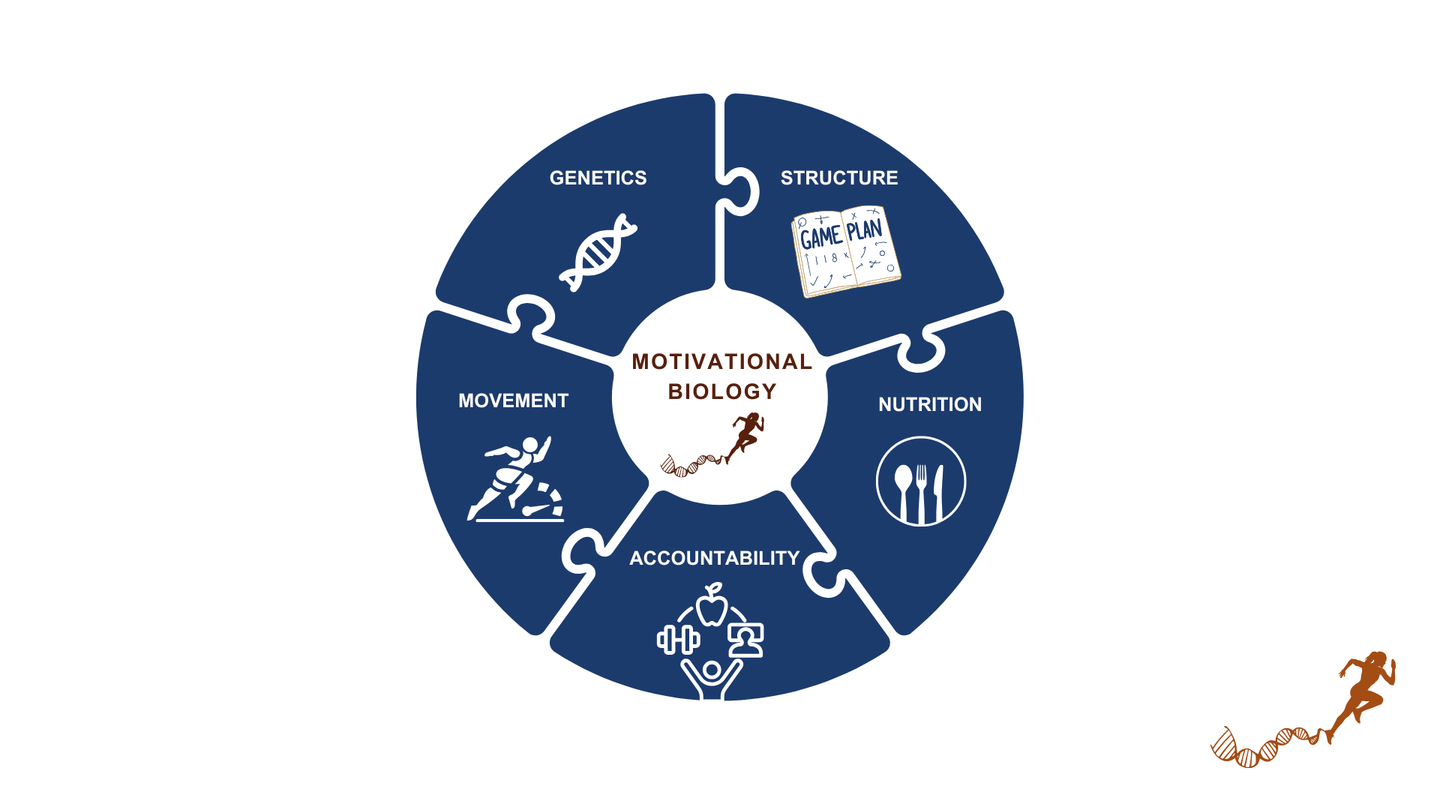
Burnout recovery isn’t just psychological — it’s biological, neurological, and environmental.
A motivational biology approach looks at how motivation, energy, and resilience are shaped by the nervous system, brain chemistry, hormones, and lived context. Rather than asking “Why can’t I cope?”, it asks “What does this system need to feel safe, supported, and sustainably engaged again?”
Below are the five key elements for neurodivergent-friendly burnout recovery.
Five Core Pillars of Motivational Biology
1. Structure (That Reduces Cognitive Load)
Burnout is often worsened by decision fatigue and invisible mental labour.
Supportive structure focuses on:
Externalising planning and memory
Reducing daily friction
Creating predictability without rigidity
For ADHD and neurodivergent burnout, structure works best when it supports the nervous system rather than trying to control behaviour.
2. Nutrition (For Brain and Nervous System Support)
Chronic stress depletes key nutrients involved in neurotransmitter production, energy metabolism, and stress regulation.
Rather than perfection or restriction, burnout‑informed nutrition prioritises:
Stable blood sugar
Adequate protein and micronutrients
Reducing physiological stress around food
This can be especially relevant for people with ADHD symptoms, where dopamine and executive function are already under strain.
3. Accountability (Without Shame)
Burnout often develops in isolation.
Gentle accountability helps by:
Providing external regulation
Reducing all‑or‑nothing cycles
Supporting follow‑through when motivation is low
This is not about pressure, it’s about shared nervous system safety.
4. Movement (As Nervous System Regulation)
Movement isn’t about optimisation or aesthetics during burnout recovery.
Instead, it supports:
Emotional processing
Stress hormone clearance
Reconnection with the body
For many neurodivergent adults, especially those with ADHD, movement is a primary regulation tool rather than a bonus habit.
5. Genetics (Understanding Baseline Capacity)
Genetics don’t determine destiny, but they do influence:
Stress sensitivity
Neurotransmitter pathways
Recovery speed
Understanding genetic predispositions can help explain why certain environments or demands have been harder to sustain and guide more personalised recovery strategies.
Why Holistic Coaching Can Work So Well
Burnout is rarely contained to just one area of life.
When energy is depleted, it often shows up simultaneously in work, health, motivation, confidence, and identity. This is where a holistic coaching approach, grounded in motivational biology, can be especially supportive — not as a replacement for therapy, but as a complementary layer of care.
Holistic coaching looks at how multiple systems interact in real life:
The nervous system and stress load
Physical energy, recovery, and movement capacity
Nutrition and blood sugar stability
Work demands, role fit, and values alignment
The practical structures that support follow-through
Rather than focusing on one symptom at a time, this approach works across domains — because burnout itself is rarely siloed.
Coaching informed by personal training, nutrition counselling, career development & life coaching allows recovery to be:
Practical, not just reflective
Body-aware, not purely cognitive
Aligned with real-world demands, not idealised routines
For many women, AFABs, and neurodivergent adults, this matters. Burnout often develops after years of compensating, over-functioning, and trying to “think” their way out of biological depletion.
A motivational biology-led coaching lens supports recovery by:
Working with capacity rather than willpower
Translating insight into nervous-system-friendly action
Rebuilding motivation through safety, structure, and energy
The value here isn’t in doing more, it’s in doing what actually supports the system you have.
In that sense, holistic coaching that takes a motivational biology approach doesn’t ask someone to become more resilient. It helps create conditions where resilience no longer has to be forced.
So... Do I Have Burnout?
If this article resonates, burnout is worth taking seriously, not as a personal failure, but as important information from your nervous system.
Burnout doesn’t mean you’re broken. It means something in your life, work, or environment is no longer sustainable for how your system actually functions.
Early support can prevent deeper health consequences and help you rebuild in a way that doesn’t require constant self‑sacrifice.
If you’d like support that’s neurodivergent‑affirming, capacity‑aware, and focused on sustainable recovery rather than pushing harder, let's have a chat about where you're at and how we can work together. You can use the button below to schedule a free, zero-obligation 1-on-1 session to get started.
In the spirit of reconciliation I would like to acknowledge the Gadigal People of the Eora Nation where I live, work and play. I pay my respects to their Elders past and present and extend that respect to all Aboriginal and Torres Strait Islander peoples living and working on the land today - the land that always was and always will be, Aboriginal land.
© Copyright 2025 Lauren Kress | Privacy Policy | LinkedIn | Youtube | TikTok