
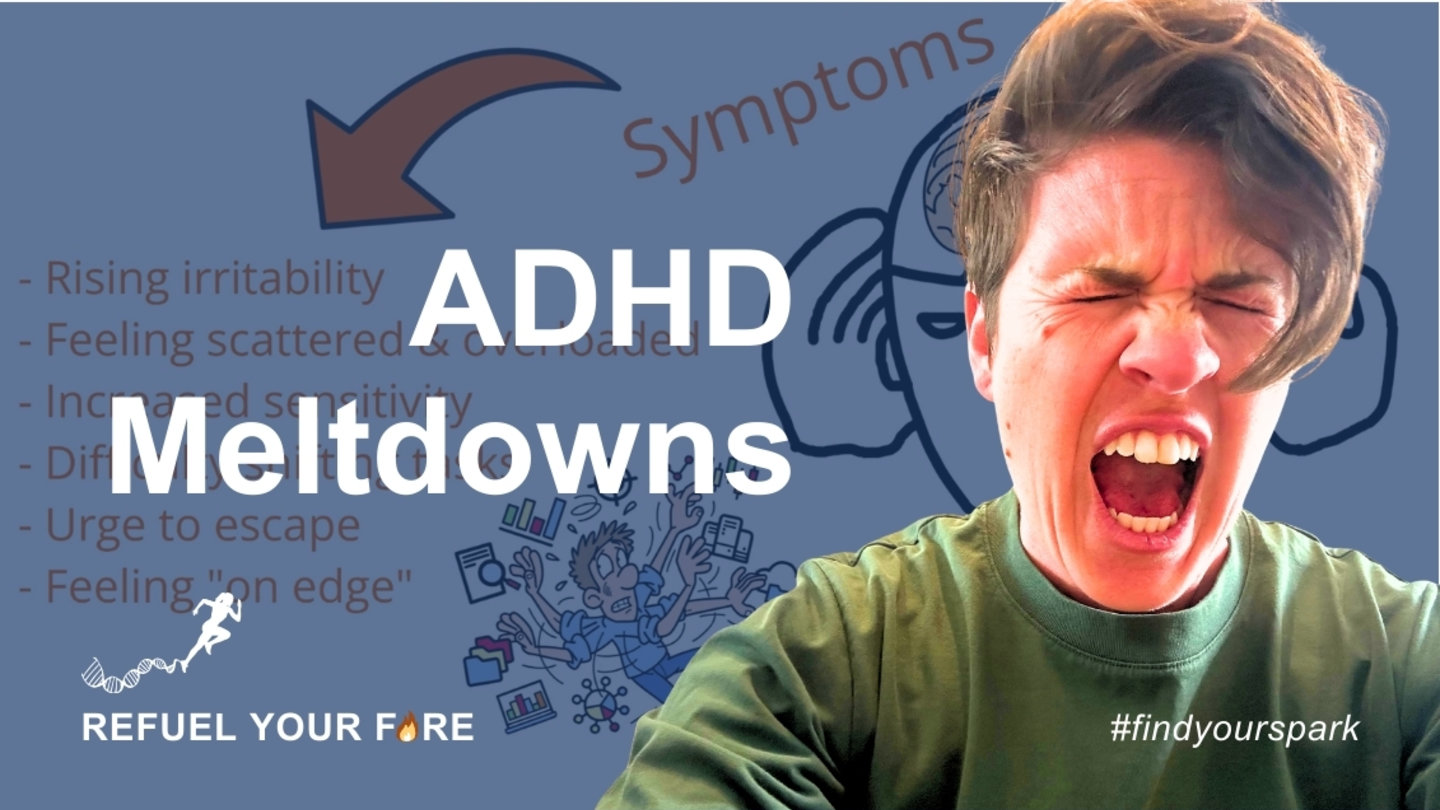
ADHD Meltdown Symptoms and Systems
ADHD meltdowns are often misunderstood as sudden emotional outbursts or a lack of self-control. But for many ADHDers and other neurodivergent nervous systems, a meltdown is rarely sudden at all.
It’s usually the end point of emotional overwhelm building over time, a nervous system that’s been compensating, managing, and pushing through without enough support.
In the video below, we explore:
Common ADHD meltdown symptoms that appear before a meltdown
Why emotional overwhelm isn’t a failure of regulation
How cumulative cognitive, emotional, and sensory load affects ADHD nervous systems
Neurodivergent-friendly systems that reduce overwhelm before it reaches breaking point
Rather than focusing on controlling emotions or “stopping” meltdowns, this approach reframes meltdowns as signals — information from the nervous system about capacity, load, and unmet needs.
The video below outlines ADHD meltdown symptoms along with the systems that can support us before, during and after a meltdown
To find out more about my free 12-month roadmapping workshop, visit: https://refuelyourfire.podia.com/build-your-12-month-roadmap
ADHD Meltdowns & Regulation Systems
ADHD meltdowns are rarely sudden
They’re usually preceded by early symptoms like irritability, mental noise, sensory sensitivity, reduced tolerance for demands, and an urge to withdraw. By the time a meltdown happens, the nervous system has often been coping for a long time.
Emotional overwhelm isn’t a failure of regulation
For ADHD nervous systems, regulation is about capacity, not control. Pushing through and trying harder often increases load rather than reducing it.
Regulation works best when it’s systemic, not reactive
Neurodivergent-friendly regulation is built through systems, not just in the moment of distress.
Effective ADHD regulation tends to work across three layers:
- Reducing baseline load so the nervous system isn’t operating at capacity all the time
- Responding to early ADHD meltdown symptoms with small, supportive interventions (movement, sensory input, pausing high-demand tasks)
- Recovering from overwhelm without shame, urgency, or pressure to explain
The goal isn’t to eliminate meltdowns entirely
It’s to reduce how much they cost over time - emotionally, physically, and cognitively - by supporting the nervous system earlier and more consistently.
Video Transcript
When people hear the phrase ADHD meltdowns,
they often picture something sudden, explosive, and out of control.
But for many ADHDers — and many neurodivergent nervous systems more broadly —
what gets labelled a meltdown is actually the end of a very long process.
A nervous system that’s been holding too much,
for too long,
without enough support.
Today, we’re going to talk about ADHD meltdowns,
the symptoms that often show up before them,
and how building the right systems can reduce emotional overwhelm before it reaches that point.
ADHD meltdowns rarely come out of nowhere.
They’re usually preceded by symptoms that build gradually, including:
- rising irritability or emotional intensity
- feeling mentally noisy, scattered, or overloaded
- increased sensitivity to sound, light, or interruption
- difficulty shifting tasks or tolerating demands
- an urge to escape, withdraw, or shut everything down
- feeling “on edge” without a clear reason
By the time a meltdown happens,
the nervous system has often been compensating for a while.
So instead of asking,
“How do I stop ADHD meltdowns?”
A more useful question is:
“What does my system need, before it gets to the point of meltdown?”
A lot of advice around ADHD meltdowns focuses on control.
Calm down.
Push through.
Try harder to regulate.
But control asks the nervous system to override itself.
Regulation is different.
Regulation is about supporting capacity,
not forcing compliance.
For ADHD and other neurodivergent nervous systems,
regulation isn’t something that happens only in the moment.
It’s something that’s built through systems.
Neurodivergent-friendly regulation systems tend to work in three layers:
Layer 1: Reducing baseline load
This layer focuses on how much the nervous system is carrying by default.
For ADHD nervous systems, this might look like:
- simplifying decisions by using a decision-making framework
- reducing unnecessary transitions or task-switching by batching similar tasks to reduce cognitive load
- intentionally scheduling recovery time, not just work
This isn’t about doing less because you “can’t cope.”
It’s about recognising that ADHD capacity is finite.
When baseline load is lower,
the nervous system has more room to respond, not react.
Layer 2: Early ADHD meltdown signals & micro-regulation
ADHD meltdown symptoms usually appear before overwhelm peaks.
Often as:
- irritability or emotional edge
- mental noise or racing thoughts
- physical restlessness or agitation
- heightened sensory sensitivity
- reduced tolerance for interruption
Regulation systems work best when they respond here, not at meltdown.
Examples of micro-regulation include:
- brief movement like walking, stretching, or changing posture
- grounding sensory input, such as pressure, warmth, or steady background sound
- pausing tasks that demand high self-control or sustained attention
- naming the experience — “this is overload” — rather than analysing or judging it
Small supports early on can prevent much bigger crashes later.
Layer 3: Recovery without shame
Sometimes ADHD meltdowns still happen.
That doesn’t mean the nervous system failed.
Recovery is part of regulation.
Neurodivergent-friendly recovery:
- doesn’t rush emotional processing
- doesn’t demand insight or productivity
- doesn’t require explanations before rest
It prioritises:
- safety
- space
- and gradual restoration of capacity
The goal isn’t to eliminate intense emotional states,
it’s to reduce how much they cost over time.
When we frame ADHD meltdowns as the problem,
we miss the conditions that created them.
When we focus on regulation systems instead,
the narrative shifts.
From:
“Why can’t I handle this?”
To:
“What would make this easier for my nervous system?”
That shift builds agency
without blame.
ADHD meltdowns aren’t a personal failure.
They’re often a sign that the nervous system has been carrying too much,
for too long,
without enough support around it.
Neurodivergent-friendly regulation isn’t about stopping reactions —
it’s about building systems that make regulation more accessible.
If this video helped you recognise ADHD meltdown symptoms earlier,
liking it helps this reach others who are searching for answers.
Subscribing means more tools like this land in your feed.
And if planning the year ahead feels overwhelming — especially after burnout or chronic emotional load —
I’ve created a free online workshop on planning in a way that works with capacity, values, and real life.
You’ll find the link in the description.
Take what’s useful.
Leave the rest.
In the spirit of reconciliation I would like to acknowledge the Gadigal People of the Eora Nation where I live, work and play. I pay my respects to their Elders past and present and extend that respect to all Aboriginal and Torres Strait Islander peoples living and working on the land today - the land that always was and always will be, Aboriginal land.
© Copyright 2025 Lauren Kress | Privacy Policy | LinkedIn | Youtube | TikTok